
Four Moves to Make Before You Close the Books on 2026
Picture the first week of January. Your 6am class has a waitlist. New members are asking where the mats go. Black Friday buyers are booking their first credits, and your front desk is fielding questions it hasn't heard since last year.
That week feels great when there's a plan behind it. And the plan gets made now, in November and December.
Most year-end conversations stop at the Black Friday offer itself. This one zooms out: how that sale shows up in your cash flow, what your first quarter needs to look like, and the team decisions worth locking in before January 1.
Start with one question: what do you want decided before January 1, so the busiest month of your year runs on a plan?
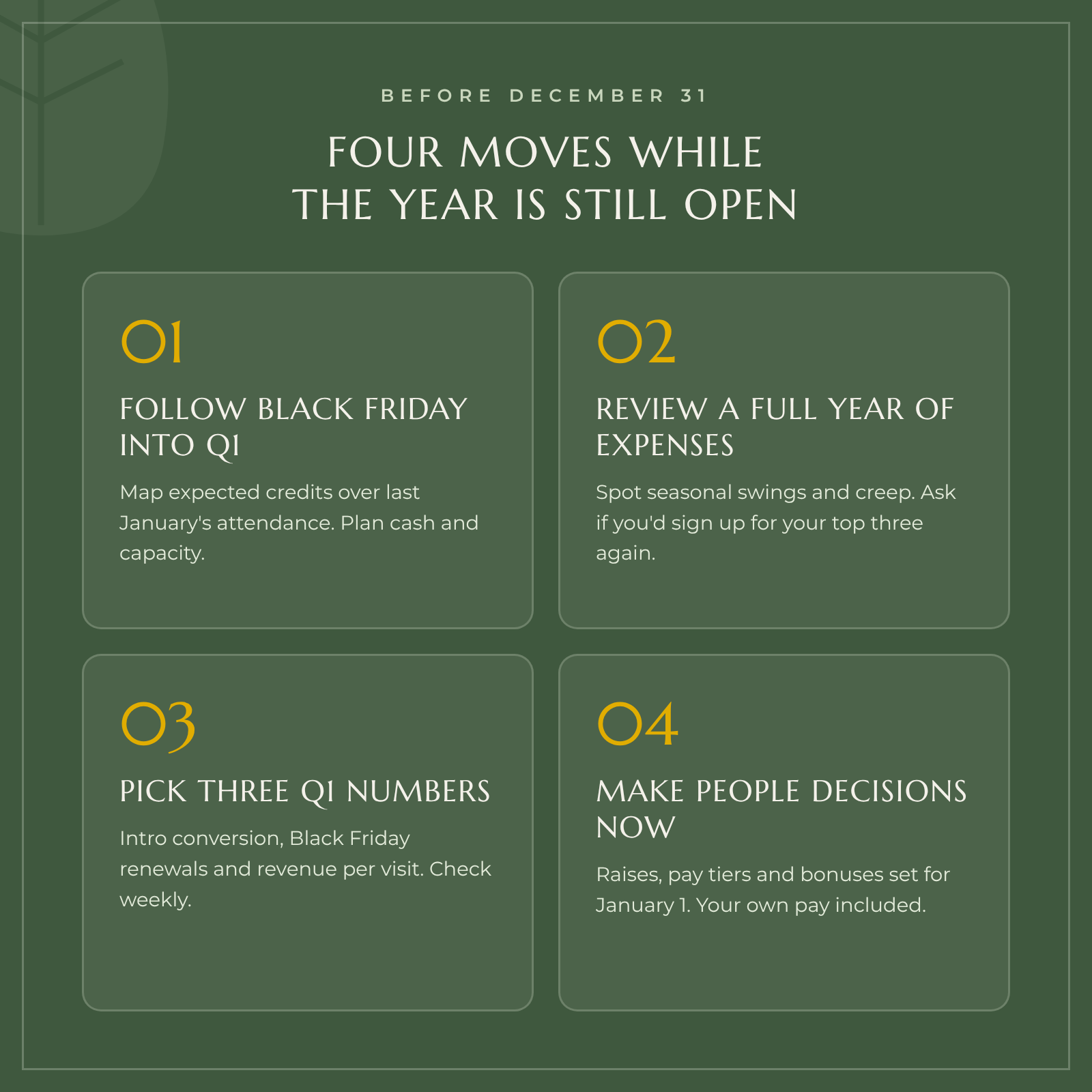
1. Follow your Black Friday packages into Q1
The cash arrives in November. The visits arrive in January. Plan for both.
Take the credits you expect to sell and lay them over last January's attendance. Say you sell 40 ten-class packs. That's 400 visits. Spread across 12 weeks, it's about 33 extra visits a week on top of your regular members.
Now look at your schedule. Do you have the class spots, the instructors and the front desk coverage to absorb that? And does the cash from November cover the payroll those visits will need in February?

2. Run a full-year expense review
Pull twelve months of expenses and read them side by side. You're looking for two things: seasonal swings you can plan around, and costs that quietly crept up over the year.
Then circle your three biggest categories and ask one question about each: would you sign up for this again today, at this price? If the answer is no, that's a decision to make before renewal season.
3. Pick three Q1 numbers and check them weekly
If you're not tracking it, you're guessing. Choose three numbers for the first quarter, set a target for each, and look at them every week.
A strong starting set for January:
Intro offer conversion: how many new clients become members
Black Friday renewals: how many package buyers buy again when their credits run out
Revenue per visit: what each class attendance is actually worth after discounts
Three numbers you check every Monday turn January from a feeling into a plan you can steer.
4. Make your people decisions before the new year
Raises, pay tiers and bonuses land better when they start January 1 than when they get sorted out in March. Decide them now, and put them in writing.
Include your own pay in that conversation. Start with what you want to take home, then work backward to what the business needs to produce to support it. Owner's pay belongs in the plan, not in whatever is left over.
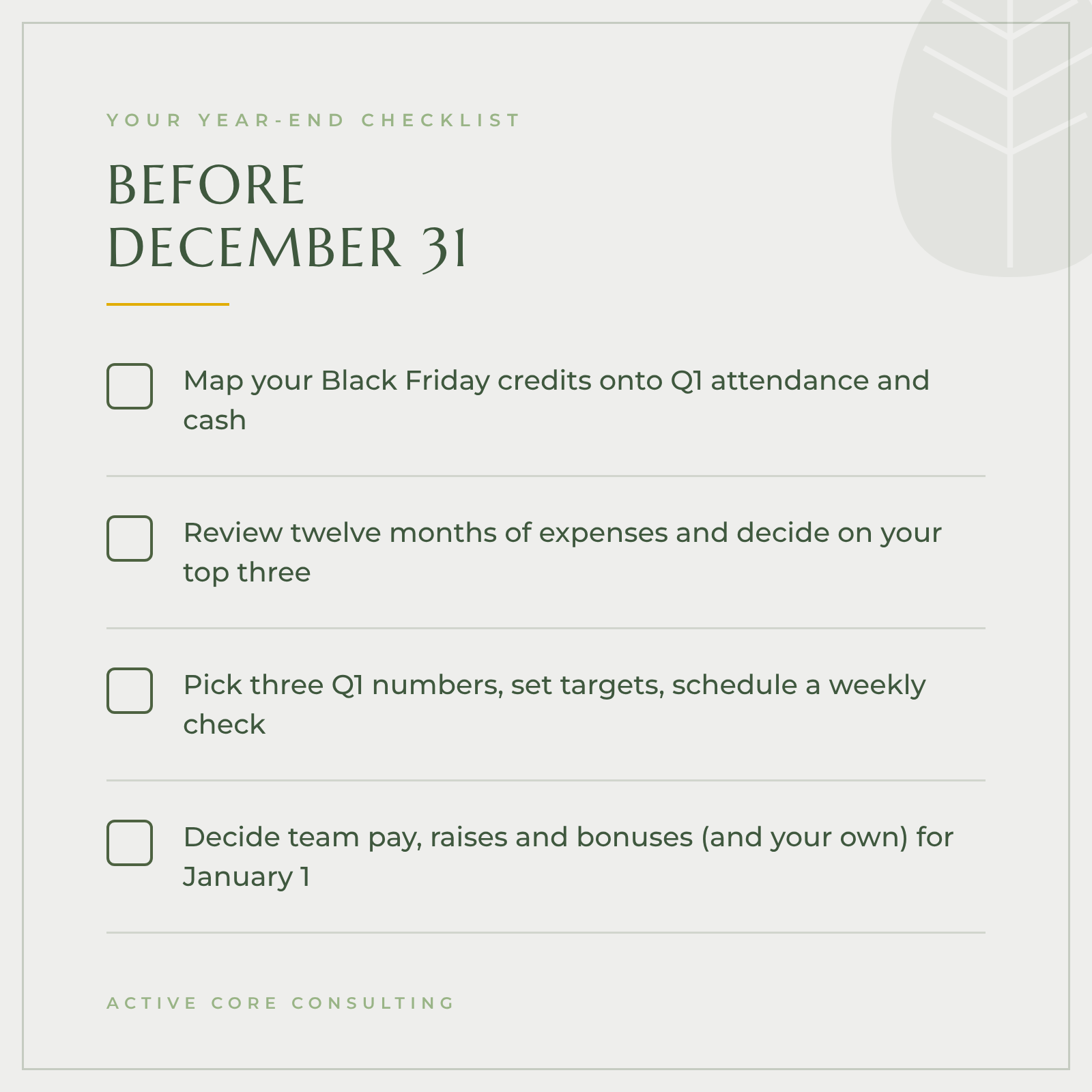
Get these on paper while you have room to think
November still leaves some space. December fills up fast with holiday schedules, year-end deadlines and a party or three. Get these four decisions down now, and January becomes the fun kind of busy.
Want a head start? Our Finance & Flow Fundamentals bundles are bite-sized, self-led trainings built for exactly these moves: Profit Clarity, KPIs, Team + Payroll and Owner's Pay. Pick the one that matches the decision in front of you.
